Table of Contents
Commercial painting and finishing solutions cover four coordinated scopes—interior painting, exterior painting, texture finishes, and surface preparation. Architects should specify a full paint system (not just a colour), sequence painting after electrical and ceiling work, and treat surface preparation as a separate sign-off stage to prevent early finish failure.
Paint is often treated as the last line item on a commercial fit-out—the thing that happens after everything else is built. But commercial painting and finishing solutions directly affect how a space reads on day one, and poor surface preparation is one of the most common reasons finishes fail within the first year of occupancy.
What Are Commercial Painting and Finishing Solutions?
Commercial painting and finishing solutions are the coordinated interior painting, exterior painting, texture finishing, and surface preparation services used on commercial, hospitality, and healthcare projects. They are planned as one connected scope — not four separate jobs — because each stage depends on the quality of the one before it.
The Four Scopes Compared
| Scope | Best For | Key Risk If Rushed | Sequenced After |
| Interior Painting | Reception, boardrooms, corridors | Colour mismatch under actual lighting | Electrical points marked |
| Exterior Painting | Facades, hospitality/healthcare frontage | Peeling from monsoon moisture | Structural/facade work complete |
| Texture Finishes | Lobby & feature walls | Uneven texture under directional light | Sample panel approval |
| Surface Preparation | Every zone, always first | Early blistering, patchwork | Plaster fully cured |
Interior Painting for Commercial Spaces
Interior painting on commercial projects has to account for high-traffic wear, corporate branding colour accuracy, and coordination with lighting design—the same paint colour reads differently under warm cove lighting than under cool office lighting, which is why colour approval should happen under the actual planned lighting, not daylight alone.
Architects should specify paint systems (primer plus number of coats) rather than just a colour code, since durability in corporate reception areas, corridors, and boardrooms depends far more on the system than the shade.
Exterior Painting for Commercial Buildings
Exterior painting on commercial buildings has to withstand weathering, UV exposure, and — in Hyderabad’s climate — monsoon moisture cycles. This requires different primer and topcoat systems than interior work, along with proper surface preparation to handle existing efflorescence or previous coating failures on older buildings.
For hospitality and healthcare projects with high visual-brand exposure, exterior finish quality is often the first impression a visitor forms before entering the building—making specification accuracy here a brand decision as much as a technical one.
Texture Finishes
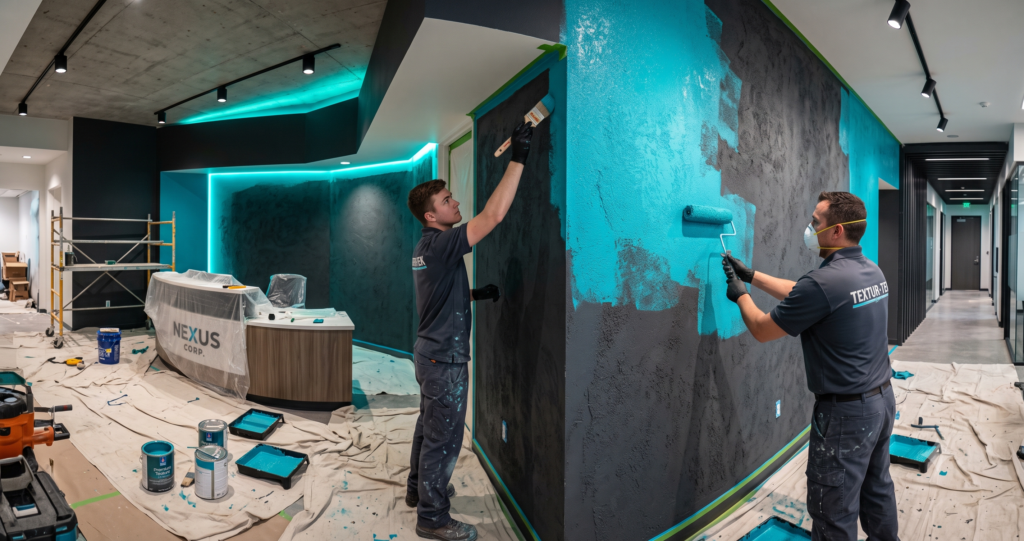
Texture finishes — from subtle sand textures to decorative feature-wall treatments — are increasingly specified in reception areas and lobby zones to create a premium first impression without the cost of cladding or stone. Texture application is more execution-sensitive than flat paint: inconsistent trowel technique or rushed drying between coats shows immediately under directional lighting.
Architects specifying texture finishes should request a sample panel on-site before full application, since texture reads differently at scale than on a small swatch.
Surface Preparation
Surface preparation is the least visible and most consequential part of commercial painting and finishing solutions. Inadequate crack filling, skipped primer coats, or painting over uncured plaster are the leading causes of peeling, blistering, and visible patchwork within the first monsoon season.
This is the stage architects should audit most closely during site visits—once topcoat is applied, preparation defects are hidden until they resurface as visible failures months later.
Coordination Checkpoints Before Painting Execution Begins
Before painting and finishing execution starts on a commercial project, architects and PMC firms should confirm the following:
- Surface preparation signed off separately from painting—cracks filled, primer cured, substrate moisture-checked
- Paint system (primer + coats) specified, not just colour code, especially for high-traffic zones
- Colour and finish samples approved under the actual planned lighting design, not daylight alone
- Painting sequenced after electrical points are marked and ceiling execution is substantially complete
- Texture finish sample panels approved on-site before full-scale application
Why Execution Coordination Matters More Than Paint Brand
Architects often spend significant time selecting the paint brand and shade, but execution sequencing and surface preparation quality determine how the finish actually performs. A premium paint applied over poorly prepared plaster fails faster than a standard paint applied correctly — the brand name on the bucket doesn’t compensate for skipped preparation steps.
This is why commercial painting and finishing solutions are increasingly briefed to the same B2B execution partner handling ceiling and electrical work on a project, rather than a separate standalone painting contractor—it keeps sequencing (ceiling, electrical, then painting) coordinated under one accountable team instead of three vendors working to three different timelines. Paint and finish specifications should also reference recognized standards such as IS 2932 for surface coating quality to ensure compliance and durability.
Frequently Asked Questions
What are commercial painting and finishing solutions?
Commercial painting and finishing solutions are the coordinated interior painting, exterior painting, texture finishing, and surface preparation services used on commercial, hospitality, and healthcare projects, planned as one connected scope rather than separate jobs.
When should painting happen in a commercial fit-out timeline?
Painting should be sequenced after electrical points are marked and ceiling execution is substantially complete, since painting before these stages usually results in touch-ups, visible patchwork, and rework.
Why does commercial paint finish fail within the first year?
Most early finish failures—peeling, blistering, and visible seams—trace back to inadequate surface preparation rather than paint quality, including skipped primer coats or painting over uncured plaster.
Should architects specify a paint brand or a paint system?
Specifying a full paint system—primer type, number of coats, and finish—gives more reliable durability outcomes than specifying a brand and colour code alone, particularly in high-traffic commercial zones.
Get Your Finishes Specified and Executed Right
Focal Spaces delivers end-to-end commercial painting and finishing solutions—interior painting, exterior painting, texture finishes, and surface preparation—coordinated with ceiling and electrical execution for architects, PMC firms, and hospitality and healthcare projects across Hyderabad. If you’re specifying finishes for an upcoming commercial project, we can review your sequencing and surface preparation plan before execution begins.
Enquire about painting and finishing execution with Focal Spaces.